The regret hits when the room is already quiet. What felt thrilling in the moment can quickly turn into a storm of shame, confusion, and heartbreak. You replay every touch, every word, wondering why you ignored the red flags. The silence after the rush is louder than ever, and your mind won’t stop
Waking up beside the wrong person often hurts more than sleeping alone ever could. The body may move on, but the heart lingers in the confusion of mixed signals, unmet expectations, and the sting of feeling disposable. You start to question your worth, your judgment, and sometimes even your ability to recognize love from lust. The emotional hangover can last far longer than the night itself.
Then come the ripple effects: awkward encounters, damaged trust, strained friendships, or the quiet humiliation of being reduced to a story others whisper about. Add to that the very real fear of STIs or an unplanned pregnancy, and what seemed like a harmless escape becomes a life-altering burden. Choosing who you share yourself with isn’t about being perfect; it’s about protecting your peace, your health, and the story you’ll have to live with when the lights are off and no one else is there.
What That Bump Down There Might Really Mean — And When to See a Doctor
It starts with a glance. A bump, a red patch, or a strange spot in your most private area. Suddenly, your mind races:

“Is this normal? Should I be worried?”
You’re not alone—genital skin changes are incredibly common, yet often surrounded by silence, shame, or fear. But here’s the truth: most causes are harmless. Still, some signal conditions that need attention. Knowing what to look for is the first step in staying healthy—and calm.
First Things First: Don’t Panic
Not every bump is a red flag. Some are caused by daily habits like shaving or wearing tight underwear. Others may be linked to skin conditions or infections—some mild, others more serious. The key is learning what’s typical and when it’s time to get checked.

Common Causes That Usually Aren’t Serious
1. Folliculitis – “Shaving Bumps”
What it looks like: Red, white, or pus-filled bumps near hair follicles
What causes it: Shaving, sweating, or friction from tight clothes
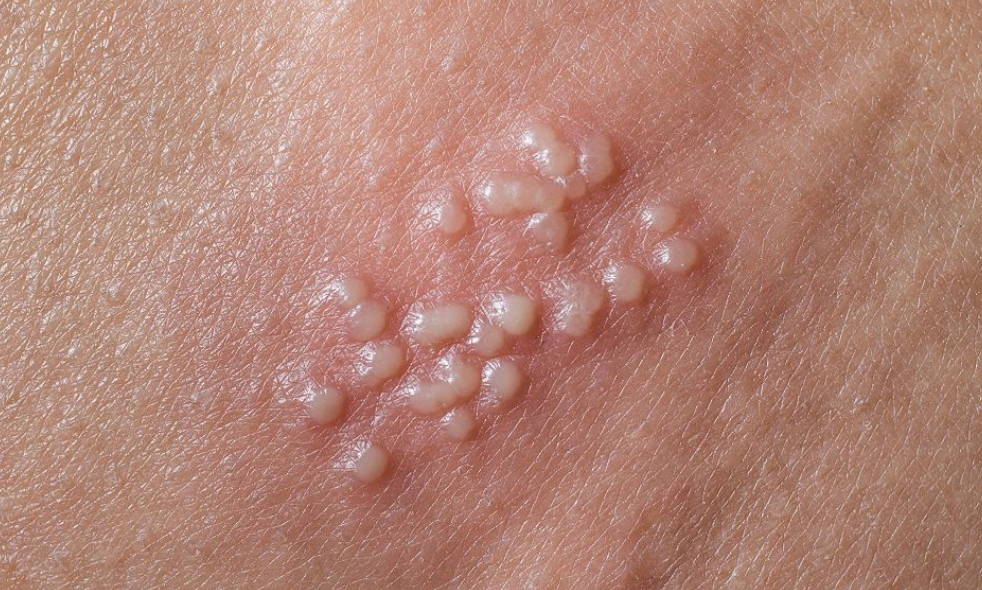
What to do: Use a warm compress, avoid shaving the area for a bit, and keep it clean. See a doctor if it gets worse or doesn’t heal.
2. Sebaceous Cysts
What it looks like: Smooth, round, and flesh-colored or yellowish bump under the skin
What causes it: Blocked oil glands
What to do: Often harmless. Don’t squeeze it. If it becomes painful or infected, a doctor can drain it safely.
3. Skin Tags or Ingrown Hairs
What they look like: Tiny flaps of skin or bumps that might look irritated
What causes them: Friction, tight clothing, or shaving
What to do: Usually harmless, but check with a professional if something doesn’t look or feel right.
Conditions That May Require Medical Attention
Genital Warts
Cause: Certain strains of HPV
What it looks like: Small, soft, flesh-colored bumps—sometimes in clusters
What to do: See a doctor for treatment options. Warts can spread if untreated.

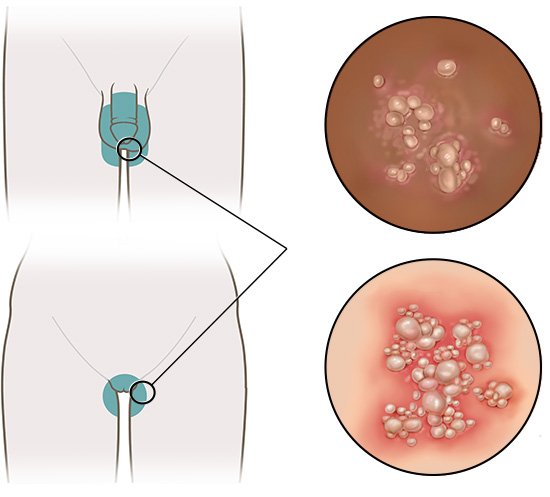
Genital Herpes (HSV)
Cause: Herpes Simplex Virus
What it looks like: Painful blisters or sores, often with tingling beforehand
What to do: See a healthcare provider. Antiviral medication can help manage symptoms and reduce outbreaks.
Molluscum Contagiosum
Cause: A viral skin infection
What it looks like: Small, shiny, dome-shaped bumps with a dimple in the center
What to do: Often goes away on its own, but can be contagious. Consult your doctor if it spreads.
Syphilis
Cause: Bacterial infection
What it looks like: A single, painless sore (chancre) in the early stage
What to do: Urgent medical treatment with antibiotics is needed. Syphilis can cause serious complications if ignored.
Lichen Sclerosus or Lichen Planus
Cause: Chronic inflammatory skin conditions
What it looks like: Itchy white patches or purplish flat bumps
What to do: Needs medical evaluation. Prescription creams can help manage symptoms.
When It’s Time to See a Doctor
Don’t wait if you notice any of the following:
Bumps that don’t go away within a week or two
Pain, burning, or unusual discharge
Sores that crust, bleed, or keep coming back
Changes in the size, color, or shape of any lesion
It might feel awkward to bring up—but doctors are trained to help, not judge. And acting early could make all the difference.
Conclusion: Pay Attention, Not Panic
Your body will change—sometimes in surprising or uncomfortable ways. But genital bumps or skin changes aren’t always signs of danger. Many are common and treatable. The real risk comes from staying silent or avoiding care.
Be informed. Be kind to yourself. And most importantly—don’t ignore your health.
Your peace of mind is worth a conversation. If something doesn’t look or feel right, trust your instincts and talk to a healthcare provider.