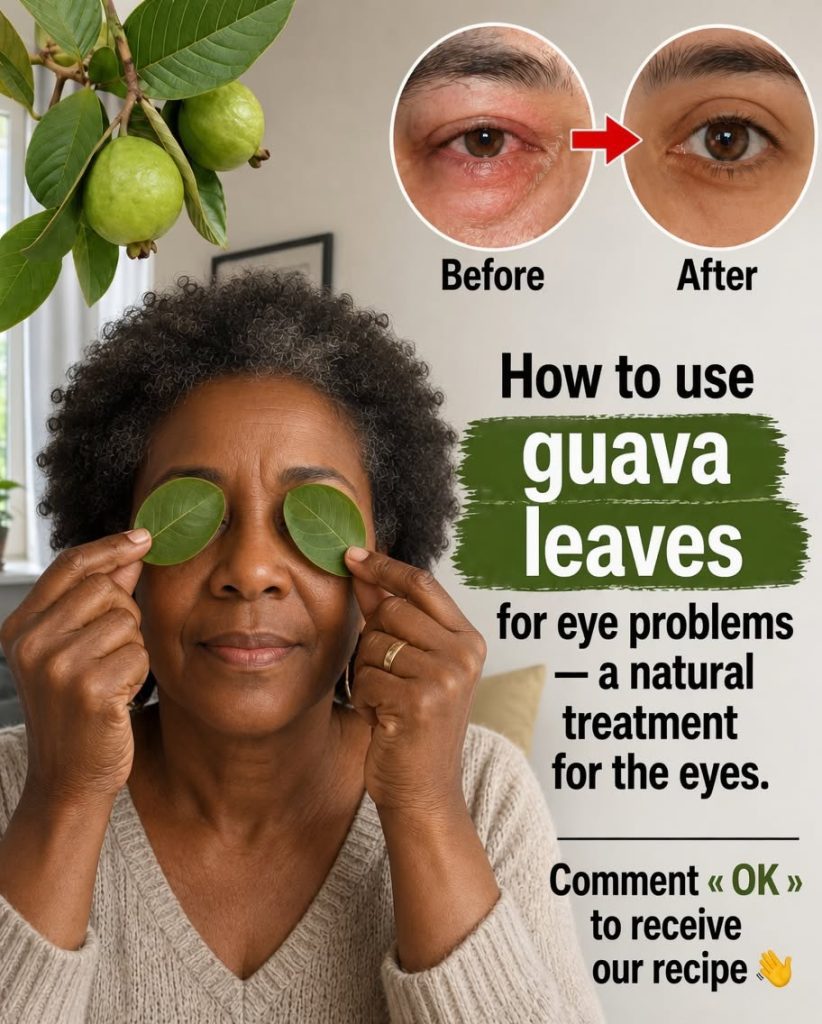
Tired, red, or irritated eyes can be more than just annoying—they can make you feel self-conscious when someone asks if you’re okay. Many people, especially in places where traditional remedies are popular, try home solutions they’ve seen online or heard about from family. One trending tip is placing guava leaves directly on the eyes. But is this really safe?
While guava is a nutritious fruit loved in many cultures, using its leaves straight on your eyes may carry risks you should know about. The good news? You can still enjoy the real benefits of guava in much safer, effective ways.
Does Guava Actually Support Eye Health?
Guava is packed with nutrients that benefit overall wellness:
- High levels of Vitamin C
- Vitamin A (important for vision)
- Powerful antioxidants like lycopene
These compounds help fight oxidative stress, which can affect eye tissues over time. Research on nutrition shows that eating antioxidant-rich fruits supports long-term eye health when part of a balanced diet.
Key point: The benefits come from eating guava, not applying the leaves directly to your eyes.
Why Putting Guava Leaves on Your Eyes May Not Be the Best Idea
Natural doesn’t always mean risk-free—especially for something as delicate as your eyes. Leaves from any plant aren’t sterile, and direct contact can sometimes lead to:
- Mild irritation or burning sensation
- Potential for bacteria or allergens
- Unwanted reactions that might make discomfort worse
Eye care professionals generally advise against putting unprocessed plant materials directly into or near the eyes. There’s no strong scientific evidence supporting this specific practice, and it’s better to err on the side of caution with such a sensitive area.
The Smart Way: Enjoy Guava’s Benefits Through Your Diet
The best part? You don’t have to give up guava to care for your eyes. Consuming it regularly can be a delicious, natural addition to your routine.
Proven perks when eaten:
- Helps protect cells (including those in the retina) from oxidative stress
- Supports immune health
- Provides vitamins that contribute to overall wellness
Easy ways to include guava:
- Eat it fresh and well-washed (skin and all for extra fiber)
- Blend into naturally sweet juices or smoothies
- Add to breakfast bowls, salads, or snacks
Pairing it with other colorful fruits and veggies makes the benefits even better.
Safe vs. Risky Uses of Guava – Quick Comparison
| Method | Safe? | Why |
|---|---|---|
| Eating fresh guava | Yes | Delivers vitamins and antioxidants naturally |
| Drinking natural guava juice | Yes | Easy way to boost nutrient intake |
| Placing leaves on eyes | No | Risk of irritation or hygiene concerns |
| DIY leaf-based eye remedies | No | Lacks strong evidence and may cause issues |
The guava itself isn’t the problem—it’s how it’s used.
Signs It’s Time to Pay Attention to Your Eyes
Don’t ignore ongoing discomfort. Watch for:
- Persistent redness
- Blurry vision
- Gritty or sandy feeling
- Excessive tearing
If symptoms continue, the smartest step is resting your eyes and consulting a healthcare professional rather than experimenting with unverified remedies.
Gentle, Natural Habits That Actually Help Your Eyes
Looking for simple ways to support eye comfort? Try these everyday tips:
- Follow the 20-20-20 rule: Every 20 minutes, look at something 20 feet away for 20 seconds
- Use clean, cool compresses (no plant leaves)
- Stay well hydrated
- Eat a variety of colorful, vitamin-rich foods (including guava!)
- Reduce screen time and manage stress
Small consistent habits often make the biggest difference.
Simple Way to Add Guava to Your Week
- Choose ripe, fresh guavas
- Wash thoroughly under running water
- Slice and enjoy with the skin on
- Mix with other fruits like papaya or berries for a nutrient boost
Aim for a few servings per week as part of a varied diet.
Final Thoughts: Nature + Common Sense = Best Results
Guava is a wonderful fruit with real nutritional value. The key is enjoying it responsibly—through food, not as a direct eye treatment. Taking care of your vision is about informed daily choices, not quick fixes.
Important Note: This article is for informational purposes only and is not medical advice. If you have persistent eye irritation or vision concerns, please consult an eye care professional.
Frequently Asked Questions
Can I use guava leaves to rinse or clean my eyes? It’s not recommended, as it may cause irritation or other issues. Stick to proven, hygienic methods instead.
What foods are good for eye health? Fruits and vegetables high in Vitamins A and C—like guava, carrots, papaya, and leafy greens—are excellent choices.
What should I do if my eyes feel irritated? Rest them, avoid rubbing, use clean cool compresses, and see a specialist if it doesn’t improve.
Have you tried adding more guava to your meals? Share your favorite way in the comments! 👀🍓
Always prioritize professional advice for any health concerns.